Nasal allergies (also called allergic rhinitis) are a common health problem. They may be seasonal. This means they cause symptoms only at certain times of the year. Or they may be perennial. This means they cause symptoms all year long. Other health problems, such as asthma, often occur along with allergies as well.
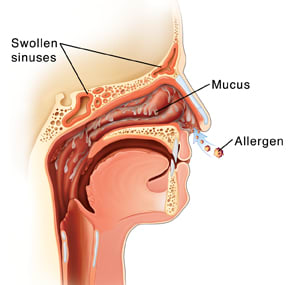
What is an allergen?
An allergy is a reaction to a substance called an allergen. Common allergens include:
- Wind-borne pollen (from grass, trees, ragweed)
- Mold
- Dust mites
- Furry and feathered animals
- Pests, such as cockroaches or rodents, in a home or other building
Normally allergens are harmless. But when a person has allergies, the body thinks these allergens are harmful. The body then attacks allergens with antibodies. Allergy antibodies are attached to special cells called mast cells. Allergens stick to the antibodies. This makes the mast cells release histamine and other chemicals. This is an allergic reaction. The chemicals irritate nearby nasal tissue. This causes nasal allergy symptoms. When this happens in the breathing tubes of the lungs, it can cause asthma symptoms, such as cough and wheeze.
Common nasal allergy symptoms
Allergies can cause nasal tissue to swell. This makes the air passages smaller. The nose may feel stuffed up or itchy. The nose may also make extra mucus. This can plug the nasal passages or drip out of the nose. Mucus can drip down the back of the throat (postnasal drip) as well. Sinus tissue can swell. This may cause pain and headache. Common allergy symptoms include:
- Runny nose with clear, watery discharge
- Stuffy nose (nasal congestion)
- Drainage down your throat (postnasal drip)
- Sneezing
- Red, watery eyes
- Itchy nose, eyes, ears, and throat
- Plugged-up ears (ear congestion)
- Sore throat
- Coughing
- Sinus pain and swelling
- Headache
It may not be allergies
Other health problems can cause symptoms like those of nasal allergies. These include:
- Nonallergic rhinitis and viruses, such as colds
- Irritants and pollutants such as strong odors or smoke
- Common home cleaning products, especially if they have strong odors
- Certain medicines
- Changes in the weather
Treatment
Your doctor will evaluate you to find the cause of your symptoms. Then they'll advise treatment. If your symptoms are caused by nasal allergies, your doctor may prescribe nasal steroid sprays or antihistamines taken by mouth (oral) to help reduce symptoms. Staying away from the allergen will also be advised. You may also be referred to an allergist. An allergist is a doctor who specializes in diagnosing and treating asthma and other allergic diseases.
Online Medical Reviewer: Dan Brennan MD
Online Medical Reviewer: Marianne Fraser MSN RN
Online Medical Reviewer: Rita Sather RN
Date Last Reviewed: 03/01/2024
© 2000-2026 The StayWell Company, LLC. All rights reserved. This information is not intended as a substitute for professional medical care. Always follow your healthcare professional's instructions.