You can express your milk and store it in clean containers. Your family or a sitter can feed it to the baby. This way, your baby gets the benefits of your milk even when you can't be there at feeding time. The guidelines below are based on guidelines from the CDC and the American Academy of Pediatrics (AAP).
|
Type of storage |
Details about storage |
Storage times |
|
Room temperature |
|
Up to 4 hours |
|
Refrigerator |
|
Up to 4 days |
|
Freezer |
|
6 months is best; up to 12 months is acceptable if stored in deep freezer at -4°F (-20°C) or colder |
Guidelines for milk storage
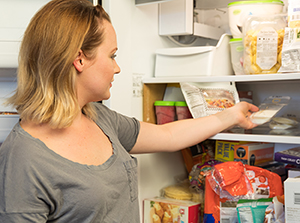
Always use a clean container to collect and store milk. Never pour warm expressed milk into a bottle with cold milk. And be sure to label and date each bottle or bag of milk. To store milk safely, see the chart above.
Warming stored milk
Thaw frozen milk in the refrigerator or in a bowl of warm water. It’s a good idea to warm refrigerated milk before using it. For your baby’s safety:
-
Use the oldest milk first.
-
Warm a container of milk by putting it in a bowl of warm (not hot) water for a few minutes. Or use a bottle warmer set on low.
-
Gently swirl the milk to mix it. Then place a few drops on your wrist. The milk should be near room temperature.
-
Don’t put the milk in a microwave. This could create pockets of hot liquid that can burn your baby’s mouth.
Featured in
Online Medical Reviewer: Heather M Trevino BSN RNC
Online Medical Reviewer: Rajadurai Samnishanth
Online Medical Reviewer: Tennille Dozier RN BSN RDMS
Date Last Reviewed: 06/01/2021
© 2000-2026 The StayWell Company, LLC. All rights reserved. This information is not intended as a substitute for professional medical care. Always follow your healthcare professional's instructions.