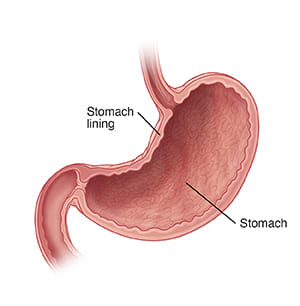
Gastritis is inflammation and irritation of the stomach lining. You can have it for a short time (acute) or it can be long-lasting (chronic). Infection with bacteria called H. pylori most often causes gastritis. More than 1 out of 3 people in the U.S. have these bacteria in their bodies. In many cases, H. pylori causes no problems or symptoms. But in some people, the infection irritates the stomach lining and causes gastritis. H. pylori may be diagnosed through blood, stool, or breath tests, or by a biopsy during an endoscopy. Other causes of stomach irritation include drinking alcohol, using nicotine products, and taking pain-relieving medicines called nonsteroidal anti-inflammatory drugs (NSAIDs), such as aspirin or ibuprofen. Some illegal drugs (such as cocaine) and some immune conditions can also cause gastritis.
Symptoms of gastritis can include:
- Belly pain or bloating.
- Feeling full quickly.
- Loss of appetite.
- Weight loss.
- Nausea or vomiting.
- Vomiting blood or having black stools.
- Feeling more tired than normal.
An inflamed and irritated stomach lining is more likely to develop a sore called an ulcer. To help prevent this, gastritis should be evaluated and treated as soon as symptoms occur.
Home care
Your doctor may prescribe medicines, if needed. If you have H. pylori infection, treating it will likely ease your symptoms. Other changes can help reduce stomach irritation and help it heal.
- Take prescription medicines as directed. If you have been prescribed medicines for H. pylori infection, take them as directed. Take all of the medicine until it's finished or until your doctor tells you to stop taking it, even if you start to feel better.
- Follow your doctor's advice on NSAIDs. Your doctor may advise you not to take NSAIDs, such as ibuprofen. If you take daily aspirin for your heart or other health reasons, don't stop without talking with your doctor first.
- Don't drink alcohol. If you need help stopping your use of alcohol, ask your doctor for treatment resources.
- Stop using nicotine products. Using a nicotine productcan irritate your stomach and delay healing. As much as possible, stay away from secondhand smoke. If you use a nicotine or tobacco product and have trouble stopping, ask your doctor for help.
Follow-up care
Follow up with your doctor, or as advised. You may need testing to check for inflammation or an ulcer.
When to contact your doctor
Contact your doctor if you have:
- Stomach pain that gets worse or moves to the lower right belly (appendix area).
- Chest pain that suddenly appears or gets worse, or spreads to the back, neck, shoulder, or arm.
- Frequent vomiting (can't keep down liquids).
- Blood in the stool or vomit (red or black in color).
- A feeling of weakness or dizziness.
- Shortness of breath.
- Unexplained weight loss.
- A fever of 100.4ºF (38ºC) or higher, or as directed by your doctor.
- Symptoms that get worse, or new symptoms.
Online Medical Reviewer: Jen Lehrer MD
Online Medical Reviewer: Marianne Fraser MSN RN
Online Medical Reviewer: Raymond Kent Turley BSN MSN RN
Date Last Reviewed: 09/01/2025
© 2000-2026 The StayWell Company, LLC. All rights reserved. This information is not intended as a substitute for professional medical care. Always follow your healthcare professional's instructions.