If the kneecap is “off track” even a bit (a tracking problem), it can cause uneven pressure on the back of the kneecap. This can cause pain and trouble with movements, such as walking and going down stairs. Below are some common causes of kneecap pain.
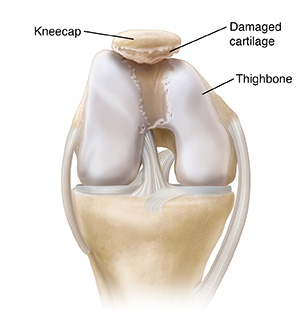
Cartilage damage
Sometimes the cartilage on the back of the kneecap or in the groove of the thighbone is damaged. Damaged cartilage can’t spread pressure evenly. Uneven pressure wears down the cartilage even more.
Dislocation
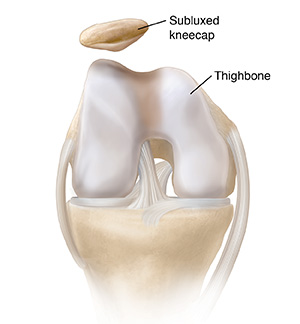
Sometimes a muscle or ligament in the knee is pulled the wrong way. Or the kneecap may be pushed too hard. Then the kneecap may move partly out of the groove (subluxation). It may even move completely out (dislocation).
Patellar tendonitis
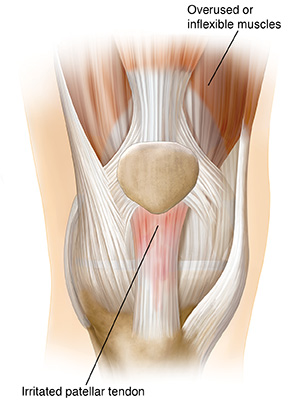
Patellar tendonitis (“jumper’s knee”) happens when the quadriceps muscles are overused or tight. During movement, the patellar tendon absorbs more shock than usual. The tendon becomes irritated or damaged.
Plica syndrome
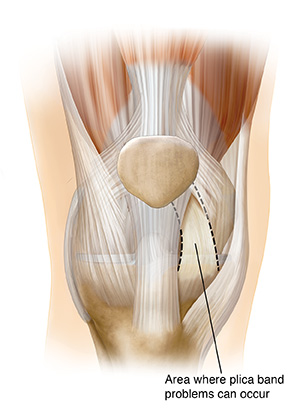
Plica bands are tissue fibers that some people have near the kneecap. They often cause no problems. But sometimes they can become irritated or inflamed.
Online Medical Reviewer: L Renee Watson MSN RN
Online Medical Reviewer: Raymond Turley Jr PA-C
Online Medical Reviewer: Thomas N Joseph MD
Date Last Reviewed: 04/01/2024
© 2000-2026 The StayWell Company, LLC. All rights reserved. This information is not intended as a substitute for professional medical care. Always follow your healthcare professional's instructions.